Drainage Contractor in Chadds Ford, PA: Matching the System to the Problem
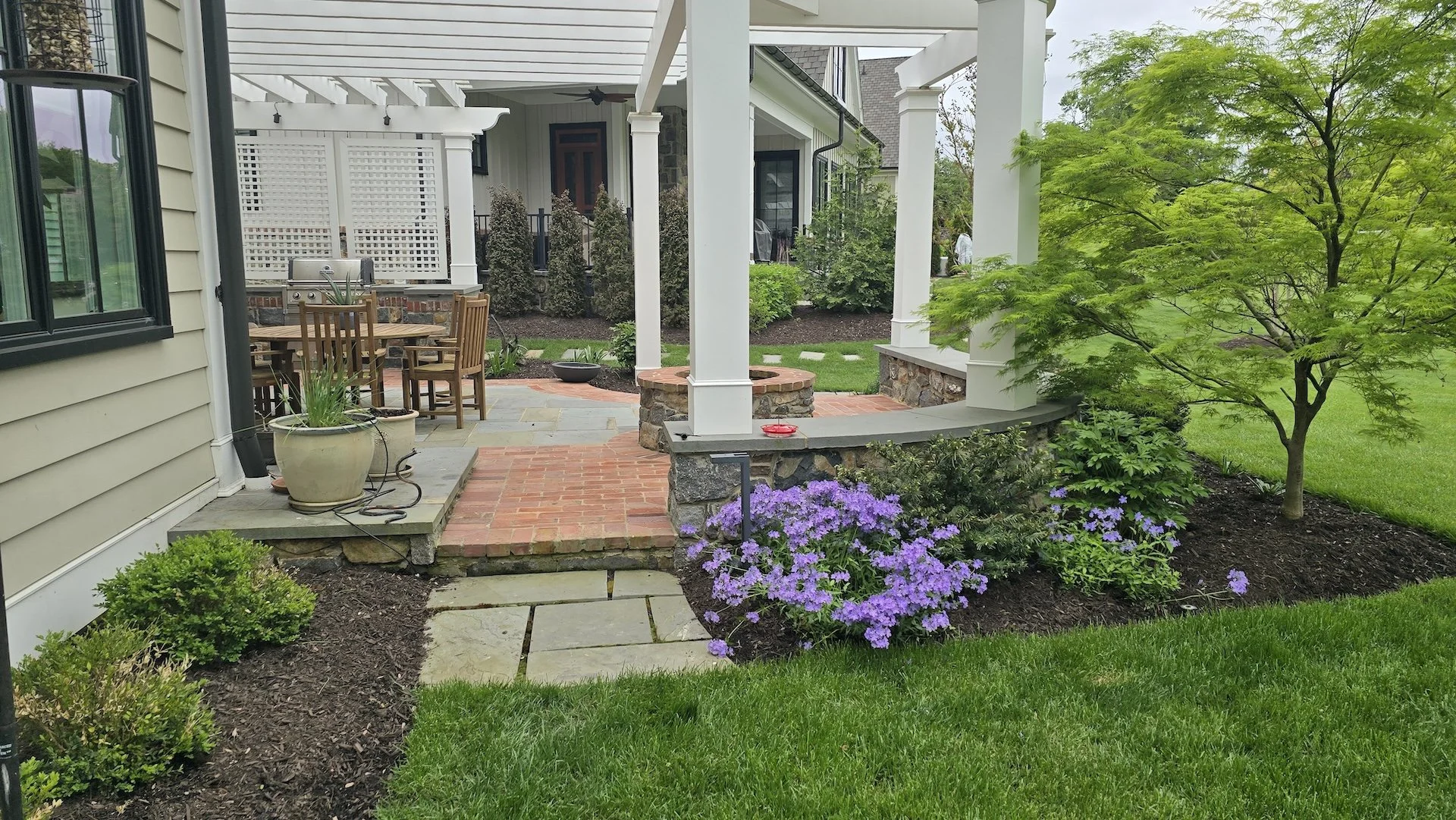
There is no universal fix for a wet property, which is why the first job of a drainage contractor in Chadds Ford, PA is diagnosis rather than installation.
A swale, a French drain, a dry well and a downspout tie-in each solve a different problem, and installing the wrong one at the right location produces exactly the same result as doing nothing.
Mark Wagner founded Brandywine Designs, and the crew he runs carries more than 100 years of combined field experience across the Main Line and Brandywine Valley.
Grading and drainage is the engineered layer beneath everything else we build. Here is how the systems differ and when each one is correct.
Related: Why Hiring the Right Drainage Contractor Matters More on Brandywine Valley Clay Soil
When Is a Swale the Right Answer?
When water is moving across the surface and there is somewhere lower for it to reach. A shaped swale carries runoff along a defined path with no pipe, nothing to clog and nothing to maintain beyond mowing it.
On properties with room and fall, it is often the most durable solution available, and it can be planted so it reads as part of the landscape rather than as infrastructure.
The limitation is space and fall. A swale needs width to work and somewhere lower to discharge into, so on a tight lot or a flat one it may not be available. Where it is available it is usually the first option worth pricing.
What Does a French Drain Actually Collect?
Subsurface water. A perforated pipe in a stone-wrapped trench intercepts water traveling underground along its length, which makes it the correct choice for a chronically saturated area or water moving toward a foundation.
It is the wrong choice for fast surface runoff, because water arriving quickly cannot enter the trench fast enough to make a difference. Where both problems occur on the same area, a surface inlet feeding the line is what handles the runoff the trench cannot.
Where Does a Dry Well Belong?
At the end of a collection system, where the volume is known and the surrounding ground will accept it.
A dry well is storage that releases slowly into the soil, so it works when the soil percolates and the well is sized for the volume arriving. Undersized or set in ground that will not accept water, it becomes a hole that fills and stays full.
Sizing is therefore a calculation rather than a habit. The volume arriving, the rate the surrounding ground will accept, and the storm the system is being designed for all feed into it, and a proposal that names a dry well without naming a size has skipped the step that matters.
Related: When is the Best Time of Year to Hire a Residential Hardscape Contractor?
Why Are Downspout Tie-Ins So Often the First Fix?
Because roof water is the single largest concentrated source on most properties and it lands in a handful of places.
Connecting downspouts to solid pipe and carrying that water to a legitimate discharge point moves an enormous volume away from the ground beside the house.
On plenty of properties across Delaware and Chester counties this one step resolves most of the complaint. It is also the least invasive of the options here, which is why it is worth ruling in or out before anything larger gets priced.
What About Township Requirements and Sequencing?
Stormwater compliance is a real part of the work, and some measures require an approved plan and township-recognized stormwater management practices rather than a shovel and a judgment call.
Sequencing matters just as much: drainage and grading go in before terraces, walls and planting, because retrofitting them afterward means opening finished work.
Neighboring properties belong in the same conversation. Water arriving from uphill needs intercepting at the boundary, and water leaving your property cannot simply be redirected onto someone else's. Establishing both directions early prevents a solved problem from becoming a dispute.
Have Your Chadds Ford Property Read Before Anything Is Dug
A wet area that has already survived one attempt at fixing it points to a system chosen before the problem was understood.
Our grading and drainage service starts with elevations, soil and where the water genuinely originates, then specifies the system that suits it.
Contact Brandywine Designs to have your property assessed.
In Summary
Can drainage be corrected without rebuilding the whole landscape?
Most corrections are targeted rather than wholesale: a regraded low area, a buried downspout run, or a single intercepting line along one edge. A whole-property rebuild is warranted only when the original grading was wrong across the site.
Does a drainage system need maintenance?
A modest amount. Outlets and any basins need to stay clear, and a seasonal check keeps a system performing as designed. Surface solutions such as swales need the least attention.
Should drainage be resolved before a patio or terrace is built?
It comes first in the sequence Brandywine Designs works to on Chadds Ford properties. Building a finished surface over an unresolved water problem means opening it again later, and correcting drainage after construction costs a multiple of doing it first.
Related: Walkway Contractor in Chadds Ford, PA: Path Width, Base Depth and Wet-Laid Stone